Bike: Marin Headlands 2 with Shimano GRX 800 groupset and hydraulic brakes (chainring, cassette, and rear wheel replaced)
— When I bought this bike in 2022, I was not thinking about this coast-to-coast trip. Otherwise, I would consider an other tour bike that allows cargo bags to be mounted on the front fork. I had to use a front rack (see its description below). But this bike did what it was supposed to do on my trip: It did not break.
Front wheel: Marin 700c
— The Marine rear wheel had to be replaced because cracks were found around spoke nipples after my loaded training.
Rear wheel: Factory DT G540/Bitex BX106 12×142 CL TA HG Road 700c
Tires: Pirelli Cinturato Gravel M, 700 x 42, Tubeless
Chain: SH XT / Ultegra HG701
Cassette: SH XT M8000, 11s, 11-46t
Chainring: Wolf Tooth 36t 110bcd GRX Asymmetric 4-Bolt 1x
— These parts didn’t come with the bike when I bought it. I must credit my bike shop (Montlake Bicycle Shop, Seattle) for their recommendations of these parts for this trip. Not a single part needed to be replaced during the trip.
Pump: Lezyne Micro Drive HP Pump LED0127-SILGLO-WITGAU Air Bleed System 160PSI maximum pressure 300mm 6.8 oz
— This is a great pump with a pressure gauge and a foot peg. The thread chuck screws on the valve to secure the air flow (no air leak when pumping). But I once screwed it too hard and made the tubeless valve rotate and break its seal.
Bike computer: Garmin 1030
— I could use this for navigation, but I didn’t. I used this on the trip mainly to monitor my heart beat rate and to record the actual route I rode each day, which could be different from the planned route (see Routes). I used RwGPS on my cell phone to navigate (in fact, just monitored my location on the map without navigation to save battery).
Front rack: Old Man Mountain Elkhorn, Short version, aluminum, 1.43 lbs. Load 25lbs, axel mount
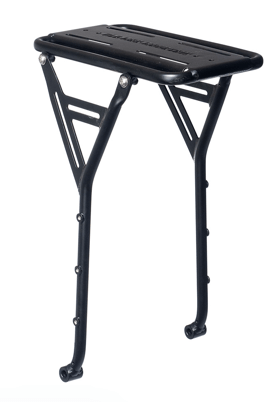
— For some reason I didn’t like handlebar bags. To balance the weight in the back, I needed to carry something in the front. I cannot mount any cargo bag directly to the carbon front fork of my bike. My only option was to have an axel mount front rack. This was not ideal. It added weight more than I wanted and it had to be dismounted to fix a flat of the front tire because of its axel mount. In the future, I would force myself to adapt a handlebar bag and not to use this front rack.
Front cargo cage: Blackburn OUTPOST CARGO CAGE, 0.28 lb, weight capacity 11 lb
Cargo Bag: Blackburn Outpost Elite (6.5L)
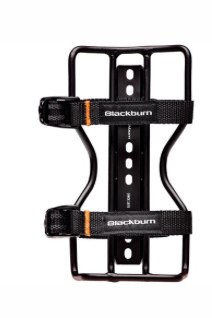
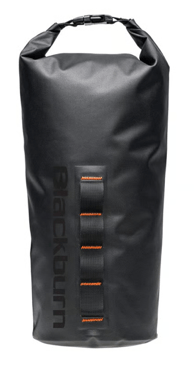
— There was no problem to mount the cargo cages on the front rack. But the default two straps were not enough to secure the bags to the cages if the bags were full. I had to use additional straps or gear ties to secure the top part. But if I wanted to ride without the cargo bags at the end of a day (e.g., go to a grocery store), they could not be quickly taken off and mounted back because of the straps.
Rear rack: Tubus Logo Classic, Steel, 1.38lbs, weight capacity 57.3lbs, tire clearance 29 x 2.35″
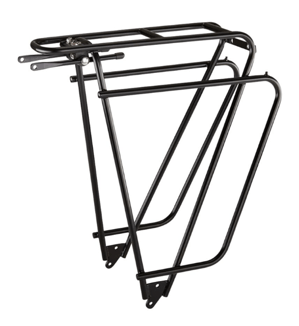
— I chose this mainly for the reason of lower mount bars that extend further back so my heels would not touch the panniers. The top cargo platform can be a little wider.
Rear panniers: Ortlieb Gravel-Pack Panniers
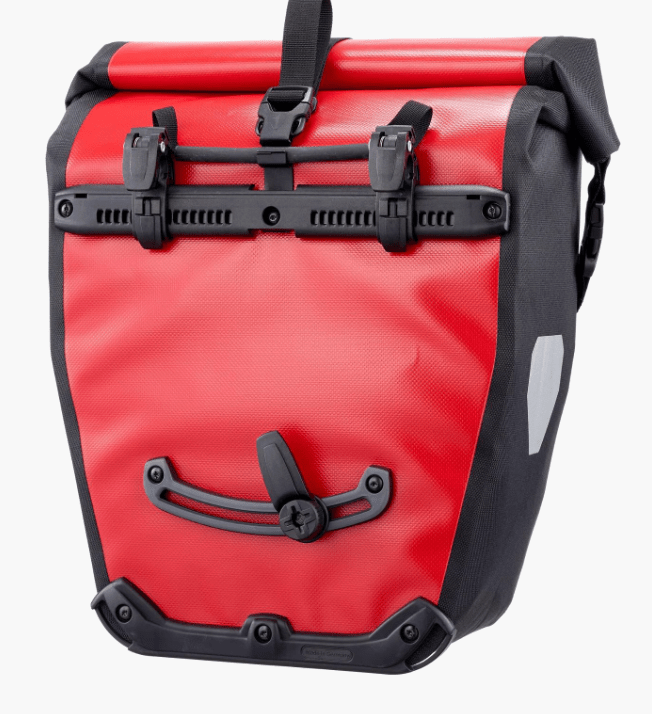
— They are very popular. Simple to use might be their best virtual. I wish there were external pockets for me to put things I want to reach easily but do not care if get wet. The bags are not as sturdy as I thought. A light scratch against a hard subject (a rock or post) would make a hole on the bag. I had two on the trip.
Top tube bag: Apidura Expedition Bolt-On Top Tube Pack Waterproof
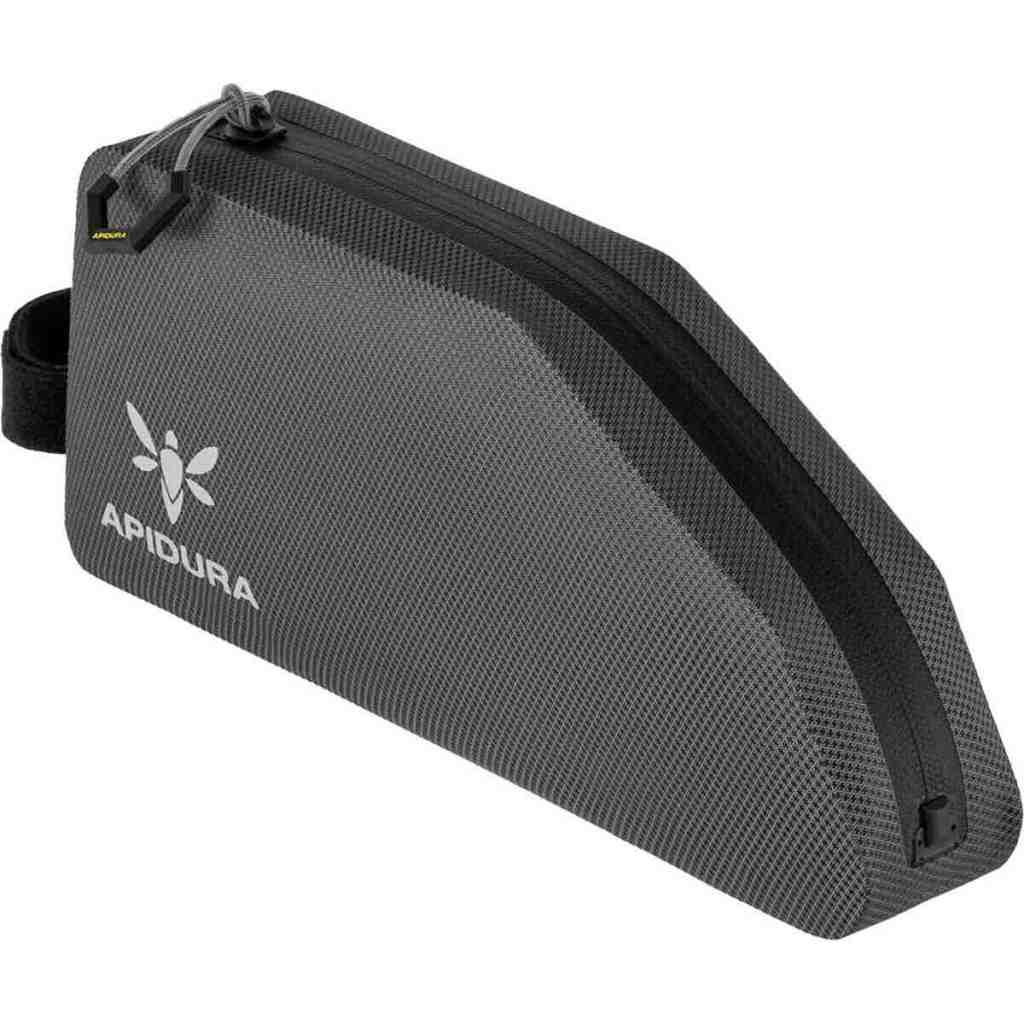
— The zipper can be hard to operate. Often I had to use both hands. There are ways to “lube” (e.g., rubbing against soap) zippers though.
Front trunk bag: VSANAM
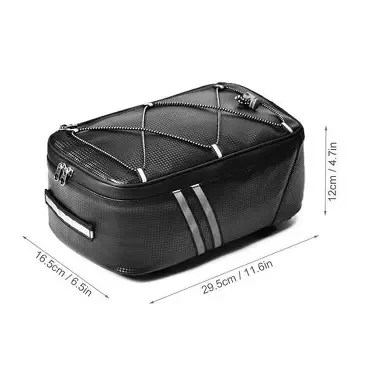
— It holds a lot for easy reach: first aids bag, camping knife and utensils, napkins, snacks, charging plugs and cables, its waterproof cover, etc. It is pain in neck to mount because three velcro straps must go between the rack and the bottom of the bag to make it stay firmly. A side pocket is handy, but its zipper broke on the trip. The top elastic string cannot hold anything tight because it does not have much strength. But you can attach small things (e.g., a hand sanitizer) to it.
Shoes: Lake MX 168
— Comfortable peddling and walking. But I still prefer to put on softer sandals right after the ride each day.
Sleeping bag: ECOOPRO Warm Weather Sleeping Bag – Portable, Waterproof, Compact Lightweight
— I was concerned of hot summer nights in the Midwest and chose this warm weather sleeping bag. It turned out that I did not have a single hot night but had to deal with many cold nights (in the lower 40s F). This thin sleeping bag could not keep me warm without extra clothes.
Sleeping pad:
- Sea to Summit Ether Light XT Insulated Air Mummy Sleeping Pad
- Switchback foam ins-R
— Sea to Summit worked fine for about 20 days on the trip and then started to leak. I patched the leak and found three more soon after. They all occurred at similar locations: near dot welds or pinholes. I mailed it back and got a Switchback foam ins-R for the rest of the trip. After the trip, I gave Sea to Summit a one-star review and contacted Sea to Summit on this. They immediately sent me a replacement. Switchback foam ins-R is worry free, but it was not as comfortable as Sea to Summit with full air.
Tent: Hyke&Byke Zion 1, 3-season 4lb&12.8oz, packed size 16.5″ x 5.5″, floor dimensions 37″ x 88″
— I like a plenty of room in my tent so I can comfortably sit inside with my upper body straight up, thus this one. It is easy to set up and take down. Some of its reviews complained about the poor ventilation that leads to dew insight. I did experience that in cold nights when I zipped up the fliers. Another potential issue is that at a hot night when you don’t want to put up the fly, you are totally exposed. The transparent mesh starts from the bottom. I saw other tents have the bottom part of the mesh nontransparent, giving you partial privacy if you care.
Stove: Soto WindMaster Stove with 4Flex Pot Support
— Worked like a charm. The only issue was the igniter stopped working on the trip. I used a cigarette lighter I brought.
Cookset: Snow Peak Trek 1400 Titanium 1.4L pot with handle; frypan with handle
— For boiling water, no issue. To cook, you’d have to stir constantly, or the bottom would burn.
Camera: GoPro13
— This is a big disappointment. Many images I took have fisheye effects. They can be fixed afterward but sometimes only partially. The voice control often didn’t work because of the noise from the wind or traffic. Video recording drains the battery quickly (less than two hours). I ended up using it mostly for single photos. Many times I wanted to capture something interesting (i.e., an unusual road sign) at about 15 feet from me. It appeared tiny on the image. I mounted it on my helmet and adjusted its position and angle so it would capture images as I saw them. It was fine only when I look straight forward. When I turned my head slightly sideway, the images would be tilted. If I wanted to make sure I had a good shot of something, I would stop and use my cell phone.
Power bank: SABANI Portable Charger 35000mAh Power Bank – Portable Battery 4 Built in Cables, 22.5W
— What I like this power bank the most is its 4 build-in cables (iOS, Type C, USB A, Micro) that can charge multiple devices simultaneously. I used it to charge my cell phone, Garmin computer, and GoPro camera in the tent over night. Once fully charged, it can charge them once per day for three days.
Rain jacket: EddieBauer
— Used it to keep me warm more than to keep me dry. It is easy to fold and strapped on top of my tent bag on the rear rack.
Clothes:
For cycling: two pairs of bibs and jerseys, two pairs of socks, one pair of gloves, one pair of full-finger gloves, one pair of arm warmers and one pair of leg warmers, a helmet, a pair of sunglasses, a sweatgutter, a handkerchief, a skull cap
For camping and others: a pair of shorts, a T-shirt, a silk long-sleeve shirt, a pair of silk long pants, a pair of warm socks, a pair of sweatpants, a pair of brief underwear, a thin hoodie, a short-sleeve shirt (the only “formal” cloth).
Other useful stuff:
Wet wipes: To clean my body after a ride without shower or washing water.
Zip-lock bags: To store snacks (cherry tomatoes, mixed nuts, hard-boiled eggs, etc.) and trash on the road. I tried to use bags that came with food (e.g., muffins, tortillas) as trash bags but when they ran out, I used zip-lock bags I brought.
A small bottle of hand sanitizer: I used it after using a vault toilet without a wall-mounted sanitizer.
Laundry clippers: To hang my cycling clothes on tree branches to dry after a ride and towel after a shower or wash. To tight opened snack bags if I did’t eat all of them once. I used small metal ones.
Dog Doger: To temper chasing dogs. It emits low-frequency sound that human can’t hear but dogs can, and they don’t like it. But it was not effective on small dogs.
Brought to the trip but not used (excluding first aids and spare parts):
Poop shelve – I didn’t do any dispersed camping.
Water filter – Again, I didn’t do any dispersed camping. In a campsite without running water, and on the road when I needed water, there was not any river or lake nearby, or the water is so dirty I didn’t want to filter it at all.
Portable speaker – I do not listen to music when I ride. I brought this to keep bears away, but I was never in a bear country.
Bear spray and bear bag hanging rope – Our routes and camping sites were not in bear countries. I did use my bear bag to fend my food from other critters (e.g., racoons, squirls).
Cycling gloves – My handlebar wraps are very thick with a lot of cushions. I brought them just in case I needed them. I did wear full-fingered gloves in cold mornings (two pairs some days!).
Extra dry bag – To replace the one I used for camping gears in case it broke. It didn’t.
Silk long pants – During my training, I found out that at a hot night or after a sweaty ride without shower or even water to clean, what kept me from having a good sleep was the sticky feeling of my sweaty legs when they touched each other. A pair of thin silk long pants solved the problem by keeping my sweaty legs from directly touching each other. During the trip, however, I didn’t have such a problem because all hot days were in the semi-desert areas of East WA and MT, where temperature dropped quickly after sunset. And most campsites I used provided running water if not showers.
Skull cap: To keep me warm at cold nights. The hoodie was good enough.
Can opener: I got a P-38 foldable one. Tiny. But I didn’t get any canned food without a pull tab on the trip.
Used but mailed back on the trip:
Sheet: This was to serve two purposes – to be used as a camping liner and to separate my sleeping pad from the tent floor to reduce the noise generated by their rubbing against each other. It was extra and unnecessary.
 Chidong Zhang's WA2MA Bike Trip